An AI-powered wellness web app for women — meal plans, workouts, and grocery lists, generated on demand and personalized to each user's goals, diet, and body. Brand, app, and marketing site — all designed and built solo.
Solo end-to-end build. Brand identity, marketing site, product UX, full-stack development, payment integration, and email launch — every layer designed and shipped by one person.
AI is the engine, not the gimmick. Claude API generates personalized 28-day meal plans and workouts based on a 6-step quiz — goal, diet, fitness level, focus areas, body data, preferences.
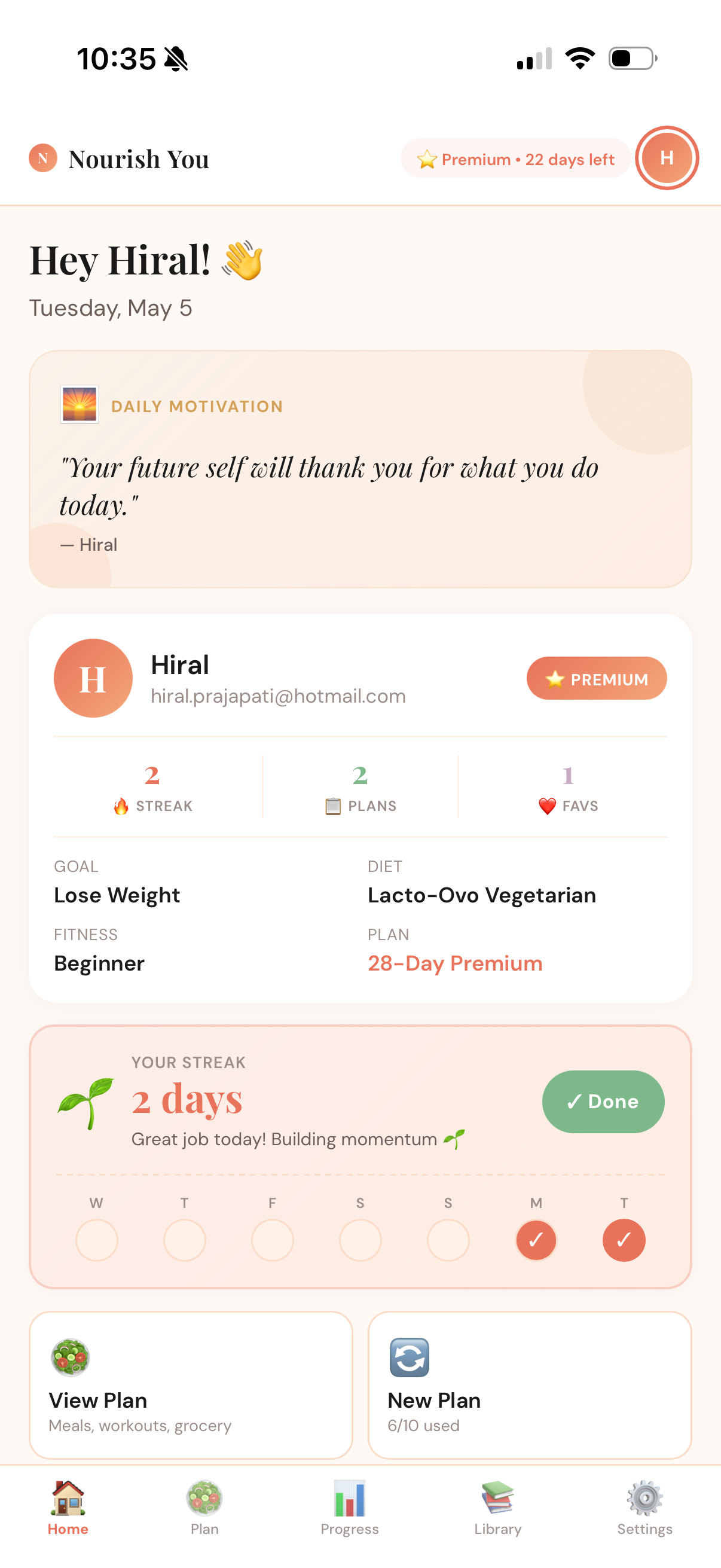
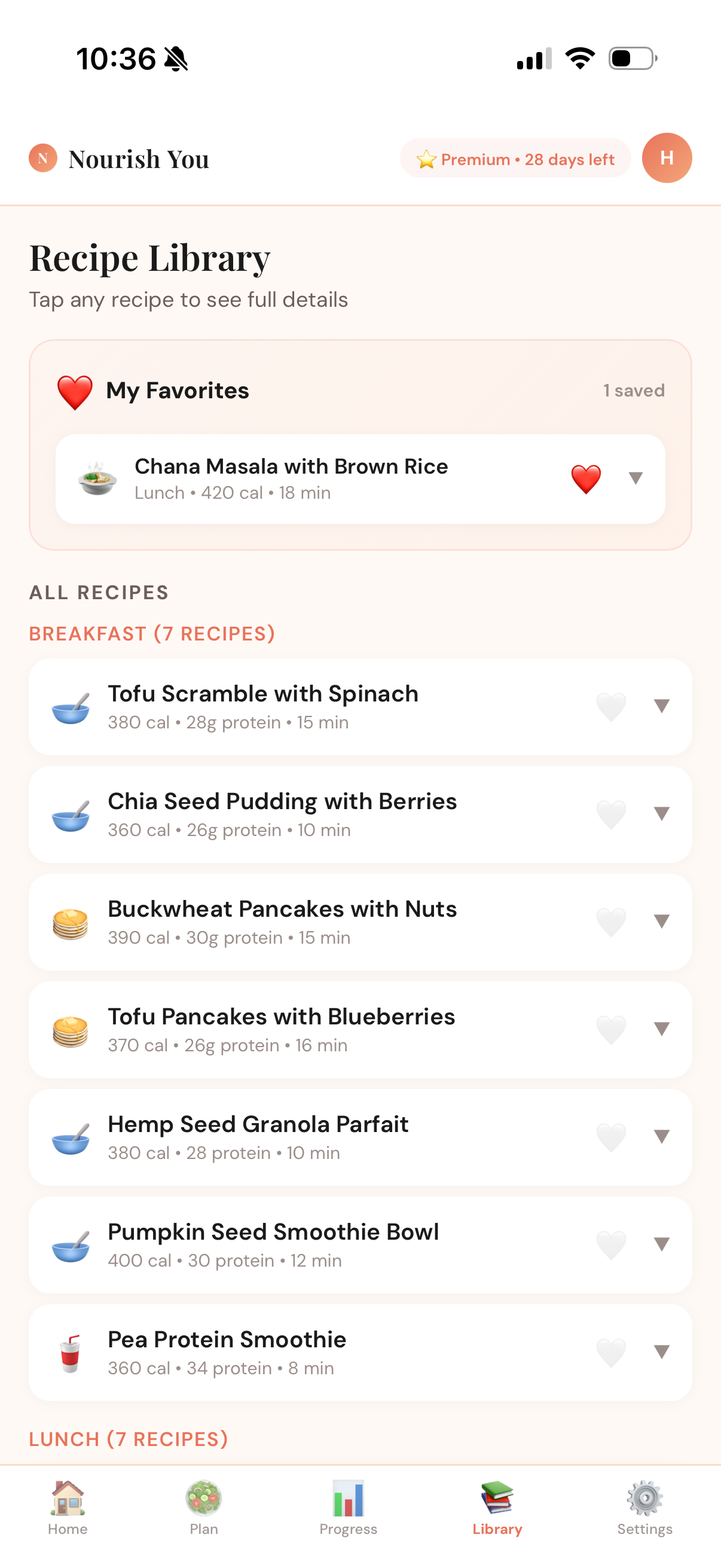
Real product features. Dashboard with streaks, recipe library with favorites, weekly meal/workout/grocery views, plan refresh, PDF export, and a 4-week progressive plan structure.
Already shipped. Live at app.fitwithhiral.com with a marketing site at nourishyou.ca. App Store submission in progress.
Audited existing wellness apps. Talked to women (working moms, busy professionals) about meal-planning friction. Identified the gap: most apps push generic plans that ignore diet, body, or cultural food preferences.
Designed a warm, editorial brand — Instrument Serif typography, peach palette, real-life feel. Mapped the full product flow: onboarding quiz → AI generation → dashboard → daily plan → tracking.
Built the app with Supabase as backend, Claude API for personalized plan generation, Stripe for premium subscriptions, and Mailchimp for email sequences. Deployed on Vercel with continuous deployment.
Launched the web app at app.fitwithhiral.com, designed and built the marketing site at nourishyou.ca, and ran email launch campaigns. App Store submission in progress.
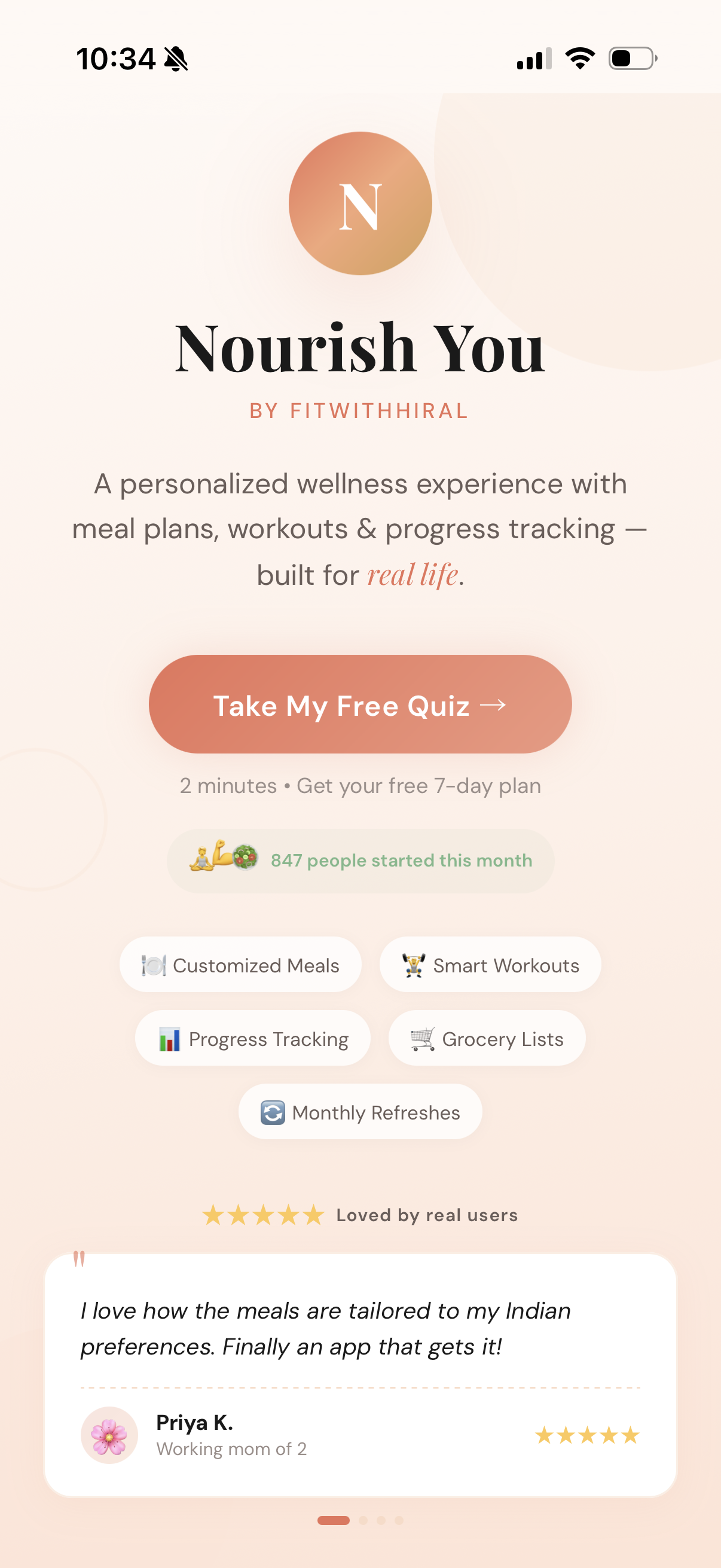
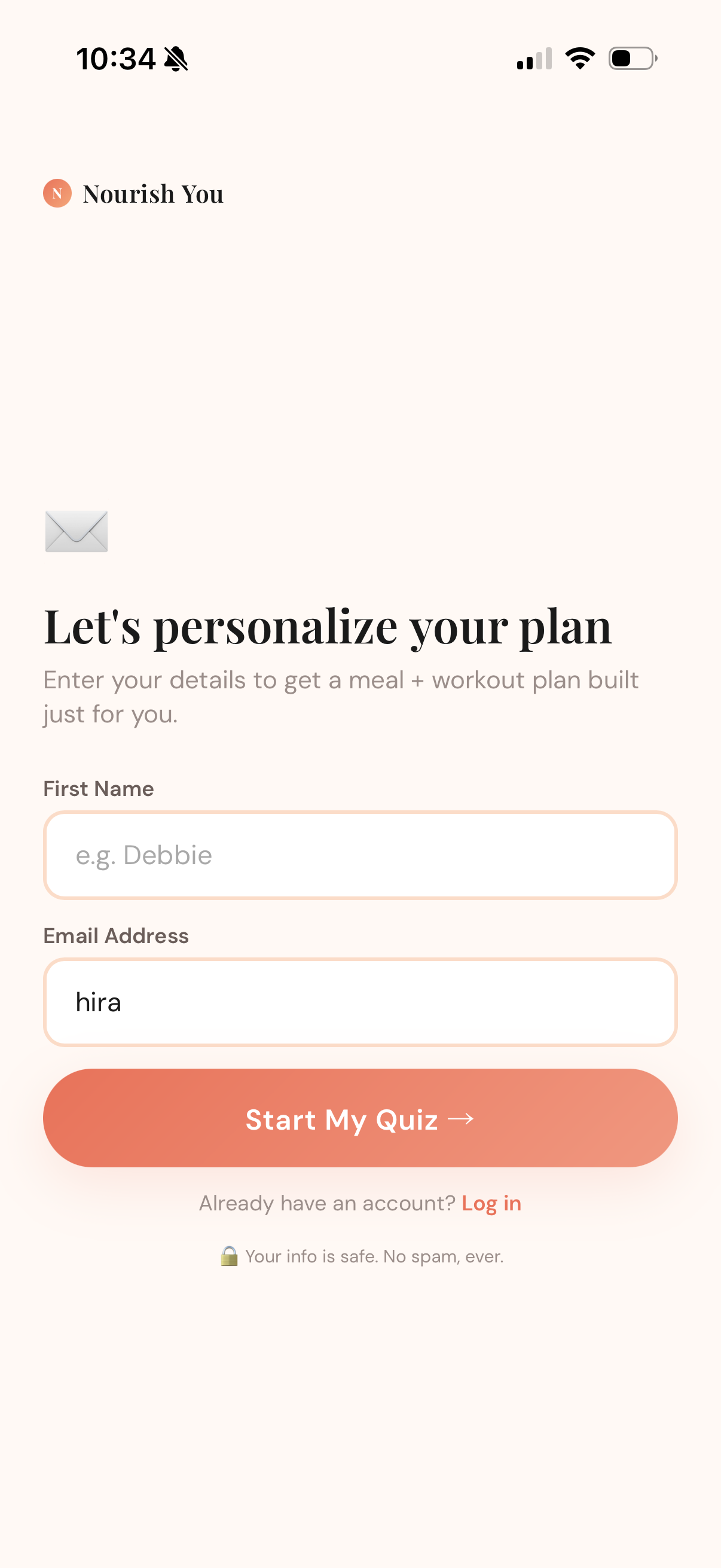
The landing screen sets expectations clearly: a 2-minute quiz, a free 7-day plan, real testimonials. Social proof ("847 people started this month") and a five-star testimonial from Priya — a working mom — speak directly to the target user.
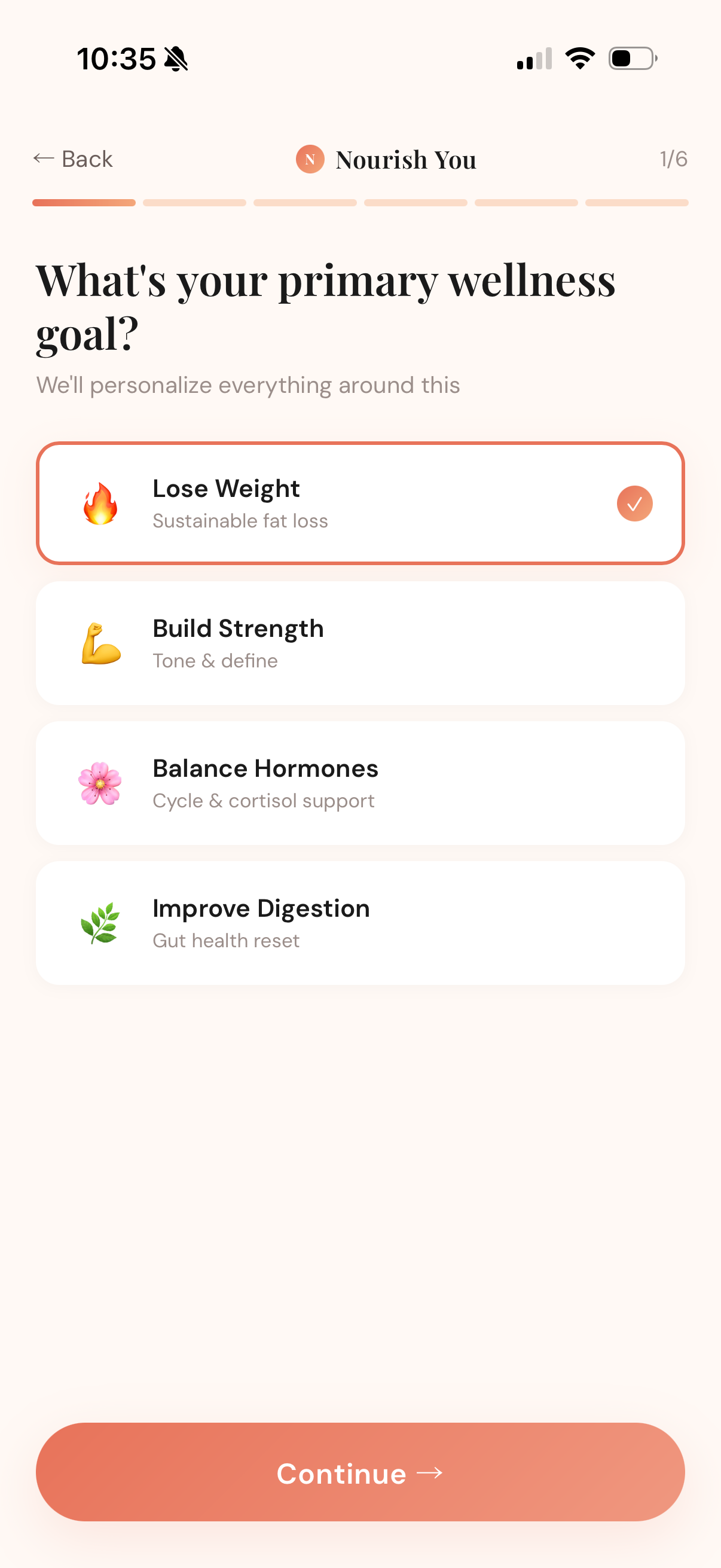
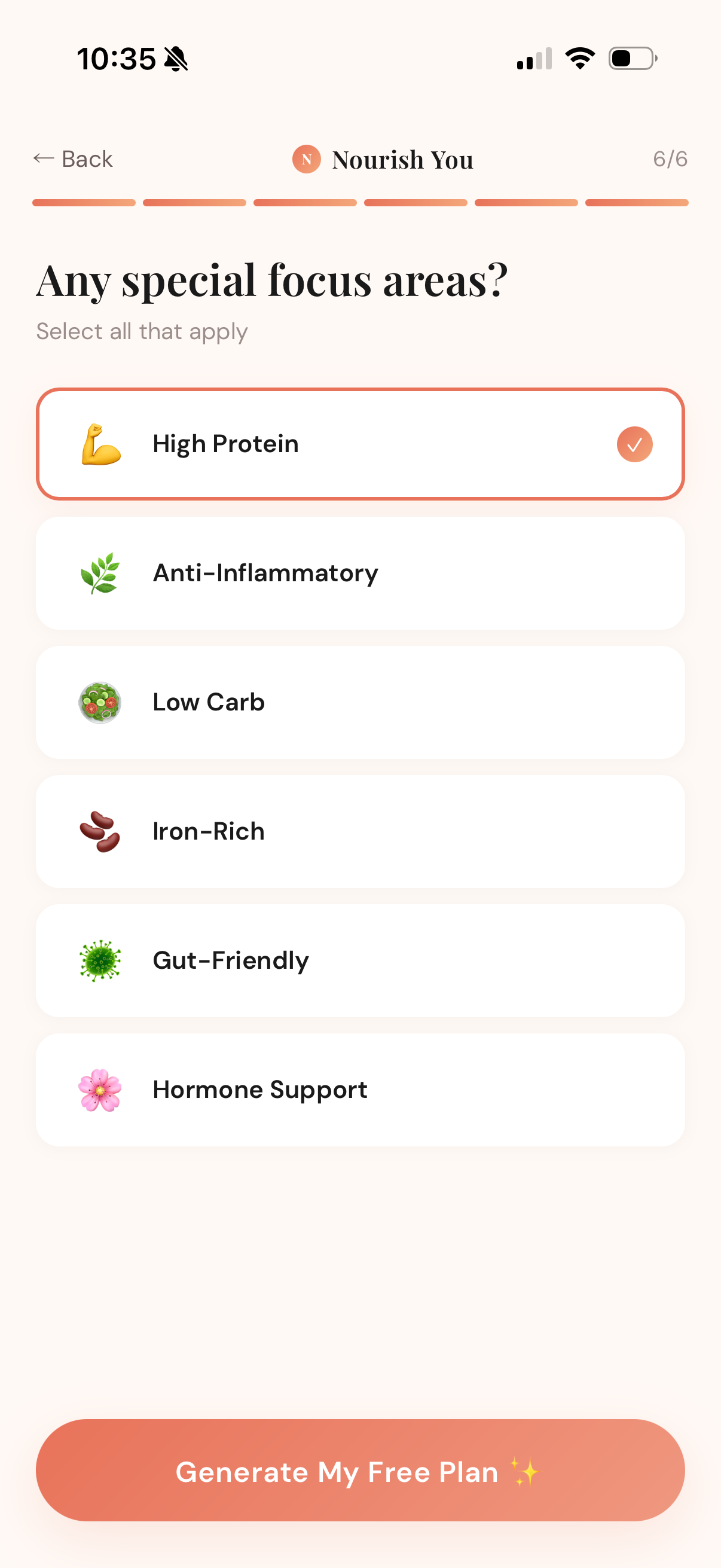
The 6-step quiz captures goal, diet, fitness level, focus areas, body data, and preferences. Each answer becomes input for the AI prompt that generates the user's plan. Clean visual hierarchy, progress bar, single-question-per-screen.
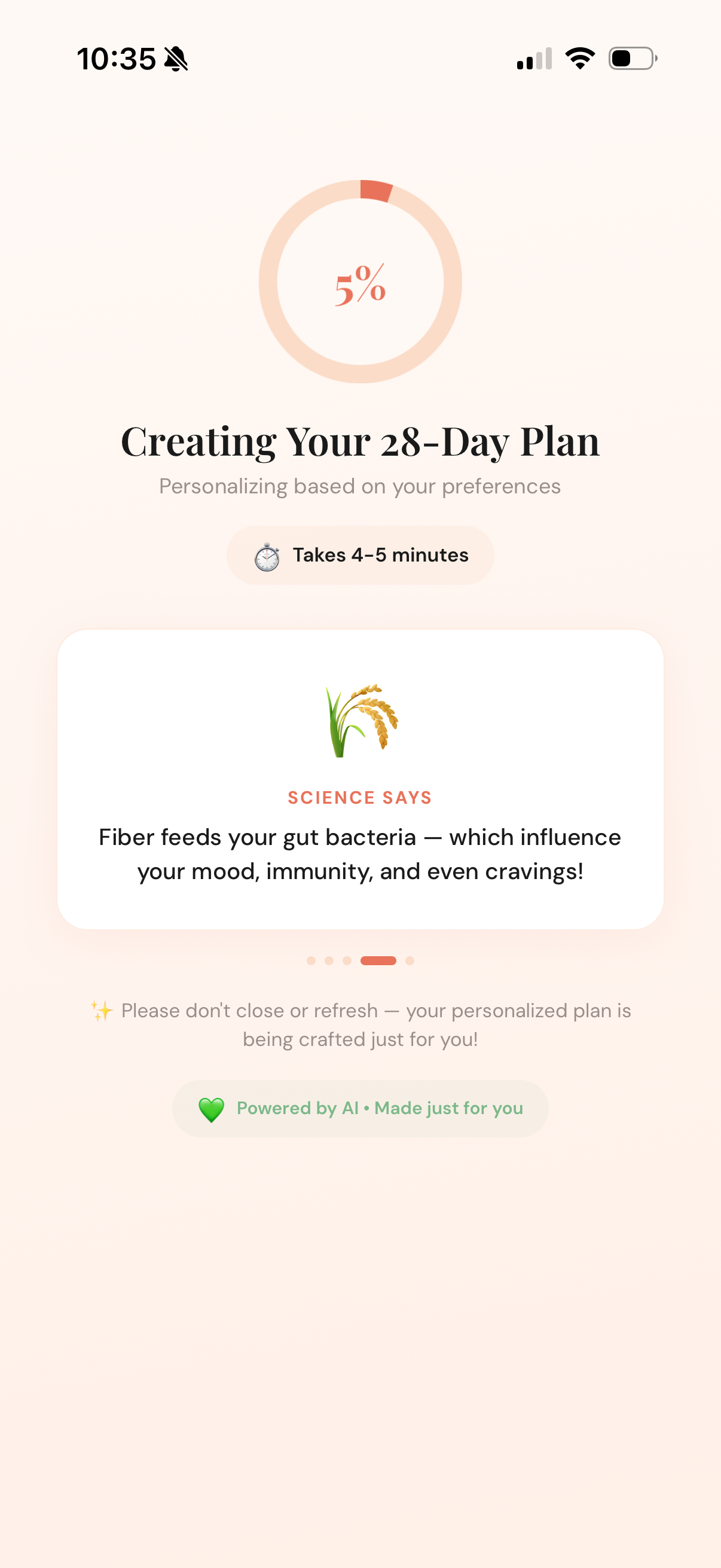
Plan generation takes 4–5 minutes. Instead of a blank loader, the wait becomes part of the experience — a circular progress dial, rotating science facts, and gentle reassurance copy. The user understands something real is being built for them.
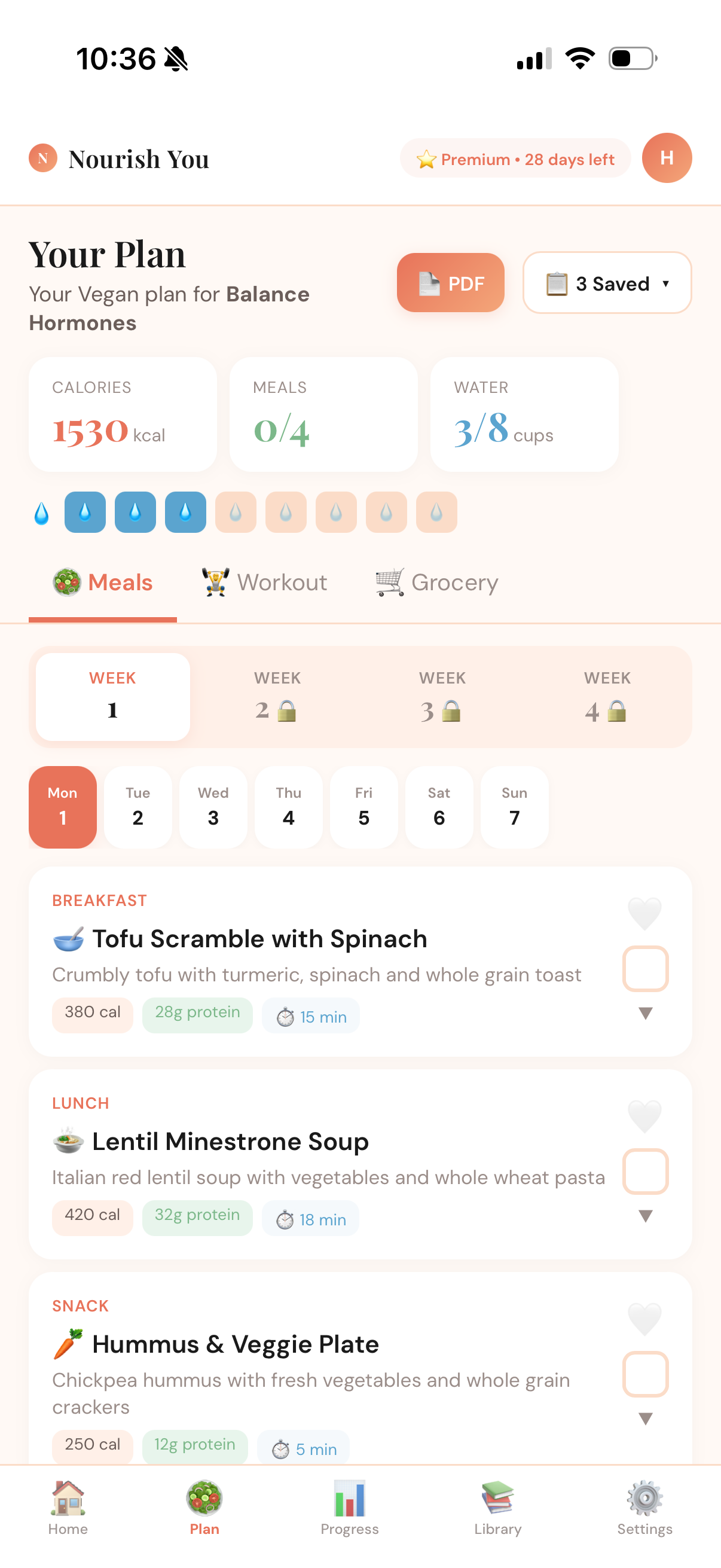
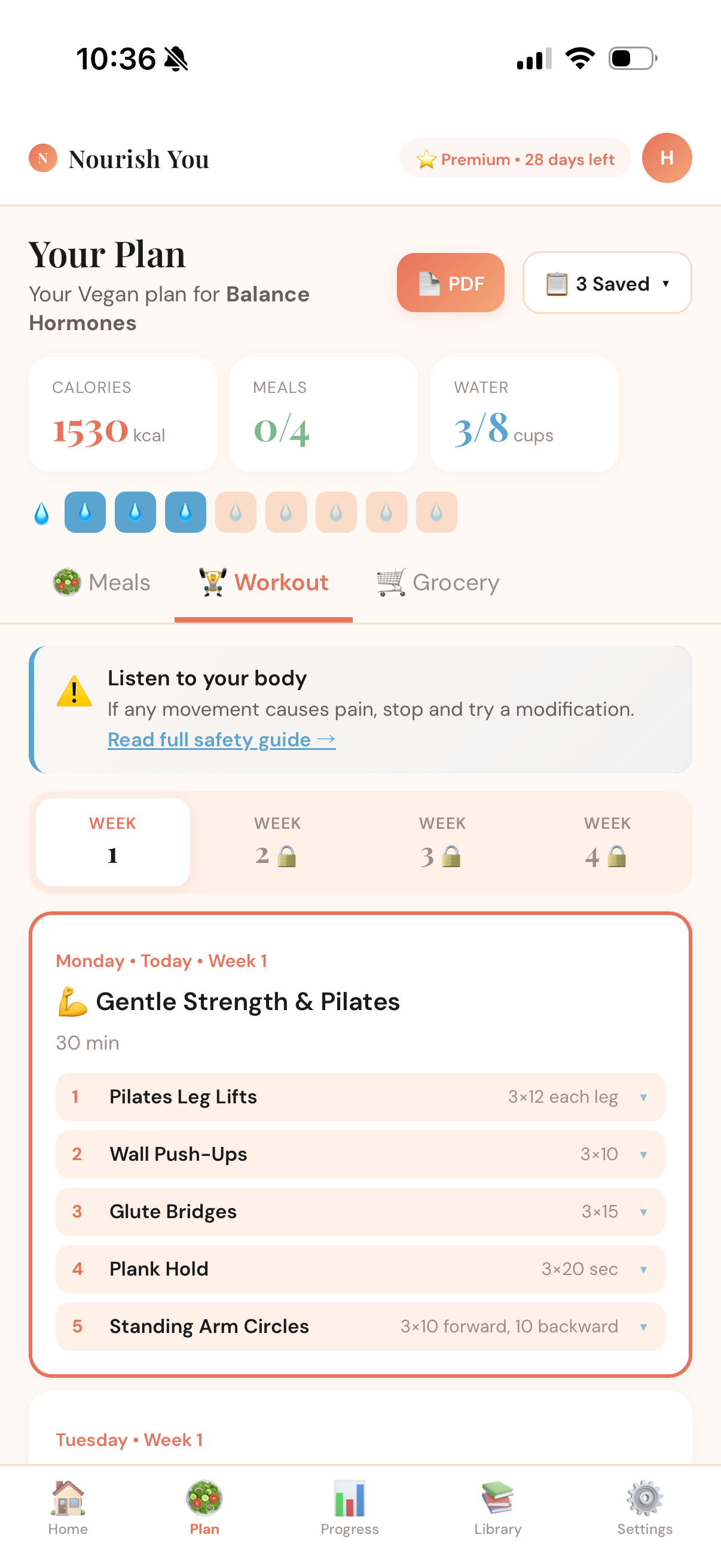
The plan view splits into Meals, Workout, and Grocery tabs. A 4-week progression locks future weeks until the current one is engaged with — building momentum and preventing overwhelm. Hydration tracking and macro stats sit at the top.
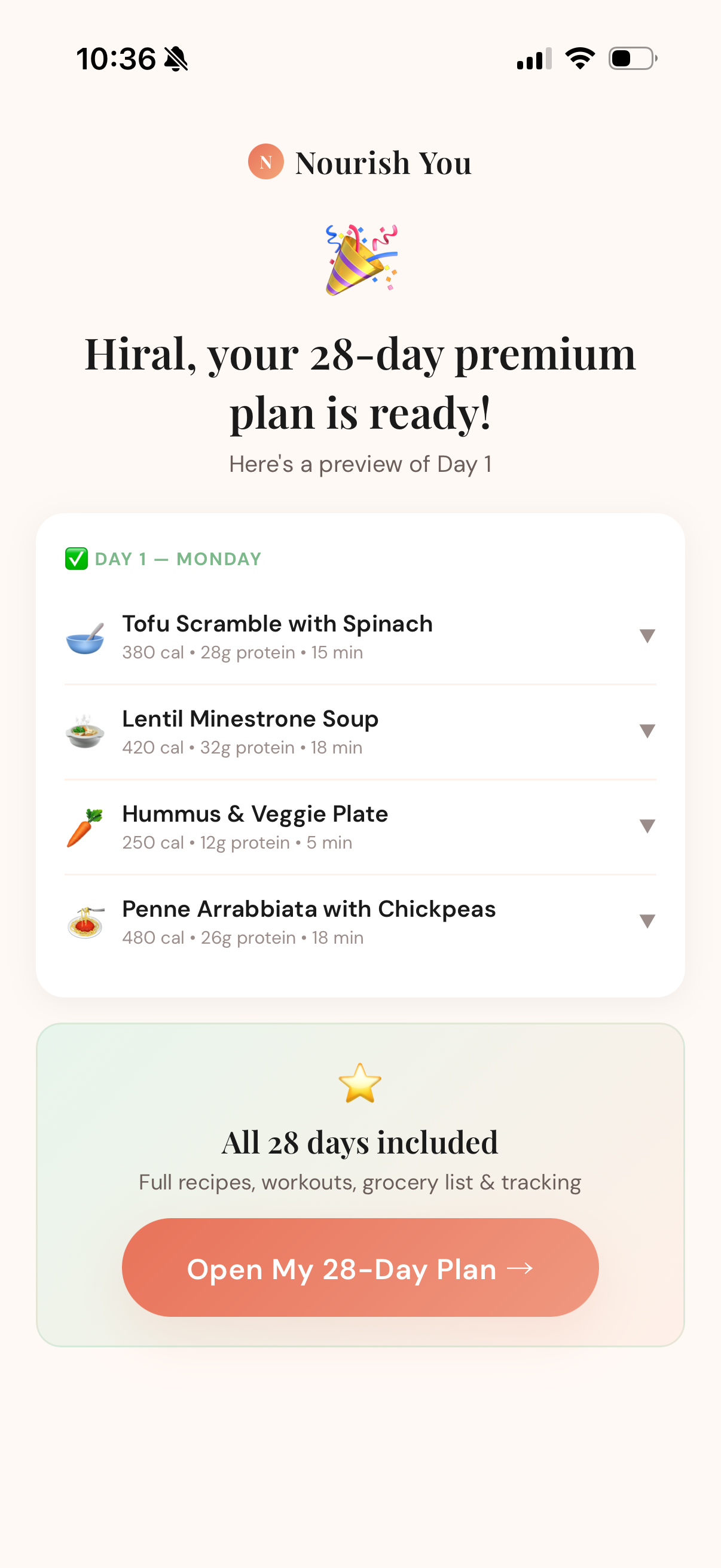
Workouts with set/rep tracking, recipe library with favorites, signup flow, plan-ready celebration screen, and the personalized home dashboard.
Six layers, one operator. Brand and marketing on the outside, AI generation and payments under the hood, deployed on production-grade infrastructure.
Designed the NourishYou brand identity from logo through to launch — typography, color, voice, and visual system. Built the marketing site at nourishyou.ca as the public face of the product.
Designed in Figma, built as a production web app with responsive layouts and a custom design system based on Instrument Serif and Inter. Component-driven so the product can scale without losing its voice.
Supabase for auth, user profiles, plan storage, and real-time data. Schema designed to support multiple plan generations per user, favorites, streaks, and tracking history across the 28-day cycle.
Claude API powers plan generation. Built reusable prompt frameworks that take 6 quiz inputs — goal, diet, fitness level, focus, body, preferences — and reliably generate a structured 28-day meal + workout plan with grocery list.
Stripe handles premium subscription payments — checkout, subscription state, and access to the full 28-day plan. Mailchimp runs onboarding sequences, plan-ready emails, and re-engagement campaigns.
Deployed on Vercel for fast, edge-served performance and zero-config production builds. Custom domain, SSL, and continuous deployment from the main branch — production-grade from day one.
Generic prompts produce generic plans. The hardest design work was building a prompt framework that encodes user diet, goal, fitness level, focus areas, and constraints into structured input — and gets reliable, well-formatted output every time.
This is design work, not engineering work. Information architecture for an AI.
A 4–5 minute generation could have killed the experience. Instead, I designed the wait as a moment of trust-building — rotating science facts, progress feedback, and reassuring copy. Users don't feel stuck; they feel like something real is being built for them.
Initial designs showed the full 28-day plan up front. Testers got overwhelmed and abandoned. Locking Weeks 2–4 until Week 1 is engaged with reframed the product as a journey, not a wall of content. Completion went up, drop-off went down.
"Hey Hiral! Tuesday, May 5" is a small detail. So is "Great job today! Building momentum 🌱". But these moments add up — they're why users stay. The product feels like a friend, not a tracker. That tone wasn't accidental; it was designed.
NourishYou ships paid plans, runs daily for real users, and is in active App Store submission. Designed, built, and operated entirely by one person.